
Two-way switch or push button: which one to choose?
It is the question that comes up in almost every project: a two-way switch or a push button? Both control a light from several places, but they are not installed the same way and do not behave the same. Here is how to choose.
The two-way switch: two points, simple wiring
A two-way switch controls one light from two places. It suits a hallway with two ends, a staircase or a bedroom where you want to switch off from the bed. It needs no extra equipment in the consumer unit: two switches linked by their conductors are enough.
Its main advantage is simplicity. Its limit: beyond two control points you need intermediate mechanisms, and the wiring gets complicated.
The push button: as many points as needed
A push button does not switch the light itself: it sends an impulse to a relay, a timer or a home automation system, which switches the circuit. You can therefore multiply control points in a large room, a loft, a multi-storey house or a hotel, with the same mechanism everywhere.
It is also the natural choice as soon as a connected installation is planned: the button provides the contact, the system does the rest. The downside: you need an extra control device, often installed in the consumer unit.
How to decide
A few landmarks are enough in most cases.
- Two accesses
- a two-way switch, unless a connected installation is planned.
- More than two accesses
- push buttons with a relay, simpler than intermediate mechanisms in series.
- Home automation, scenes
- push buttons, everywhere.
- Renovating an existing circuit
- keep the principle in place (two-way or push button), it avoids redoing the wiring.
Pairings on a single plate
Nothing forces you to pick a single type: a double plate can combine a two-way switch (for the ceiling light) and a push button (for a scene or a shutter). References CC14 and CC24 of the Classic series combine exactly both. The gesture then follows the use, and the metal stays the same from one control to the next. Wiring is a job for a qualified electrician, who checks the circuit, the regulations and the compatibility with your installation.
Products in this article
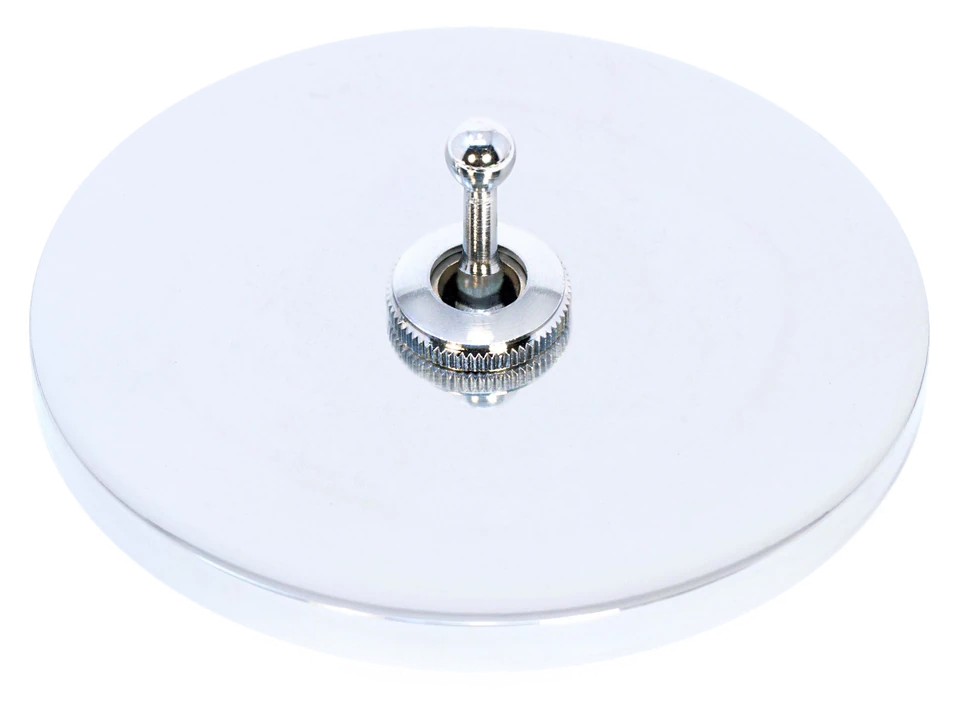
The classic two-way switch: two control points, no extra equipment.
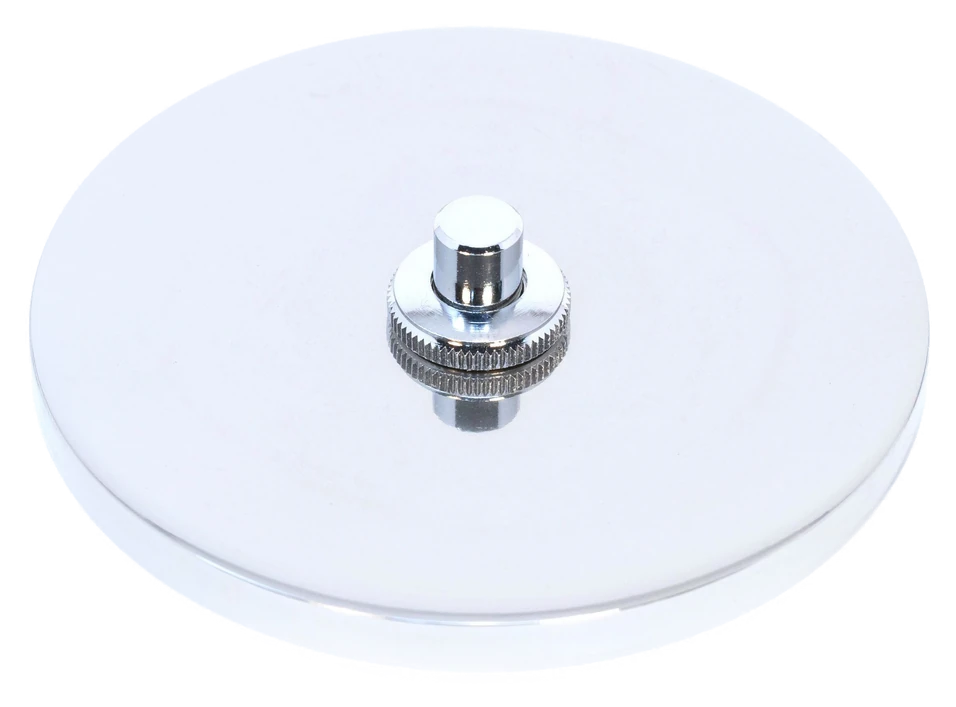
The push button for a relay or a connected installation.
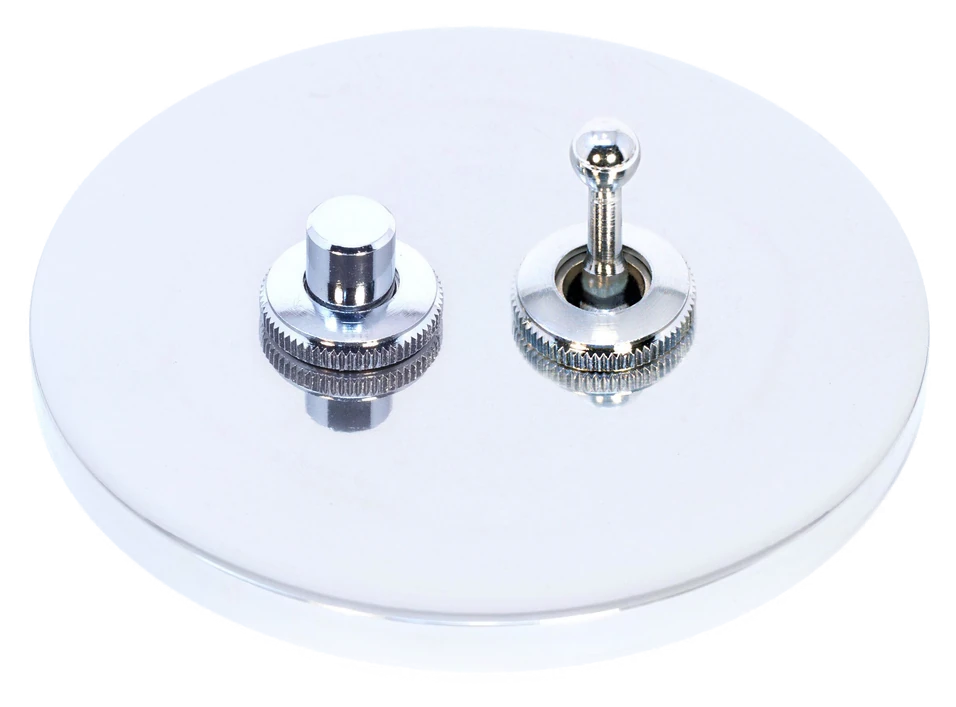
Both gestures on one plate: a push button and a two-way switch.
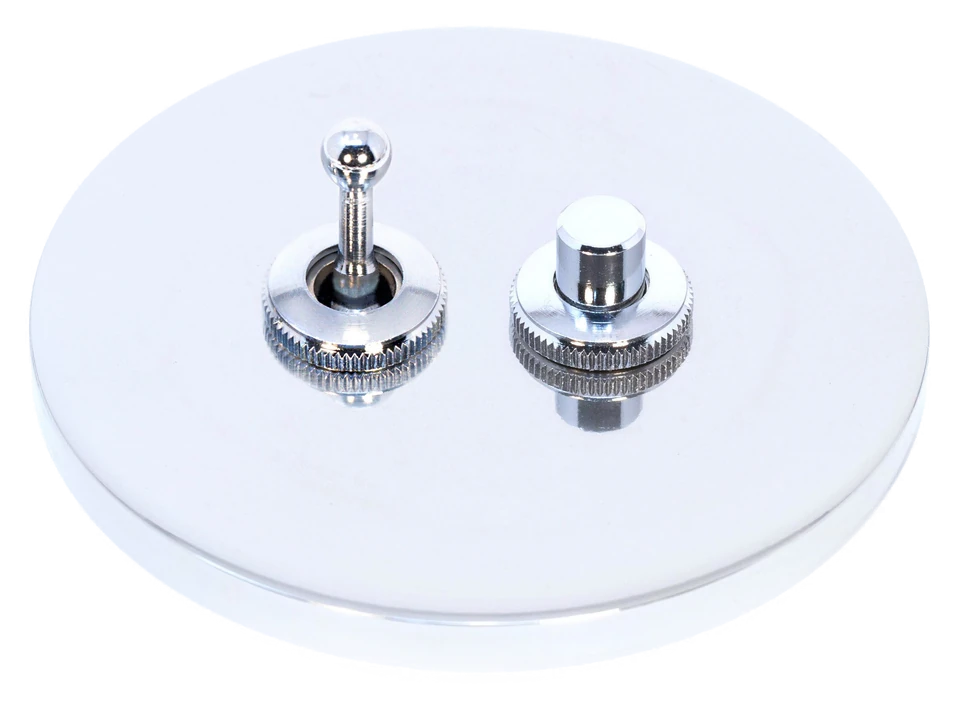
The same pairing reversed, to follow the order of use.
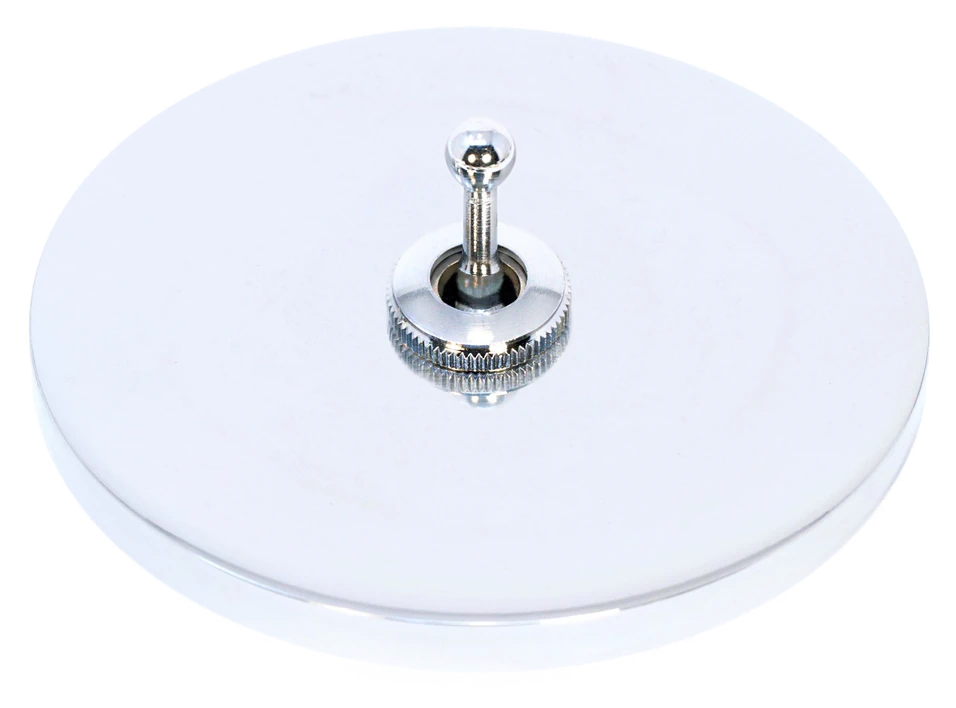
A lever push button, for the feel of a vintage switch.
Ready-to-order configurations

Frequently asked questions
- Does a push button work without a relay?
- No: a push button sends an impulse, so you need a relay, a timer or a home automation system to turn it into a light command.
- How many control points can you have with a two-way switch?
- Two with two two-way switches. Beyond that you need intermediate mechanisms, or more simply push buttons with a relay.
- Can I replace a two-way switch with a push button?
- Not directly: the wiring and the control device are not the same. Have an electrician study the change.
A project to equip?
Compose your plates in the configurator, or tell us about your project: we help you choose mechanisms and finishes.
Keep reading
Guide7 min readWhich switch for which room? A room-by-room guideTwo-way switch, push button, indicator light, USB or RJ45 socket: which switch to choose for each room and use. The Empereur Paris guide, with matching products.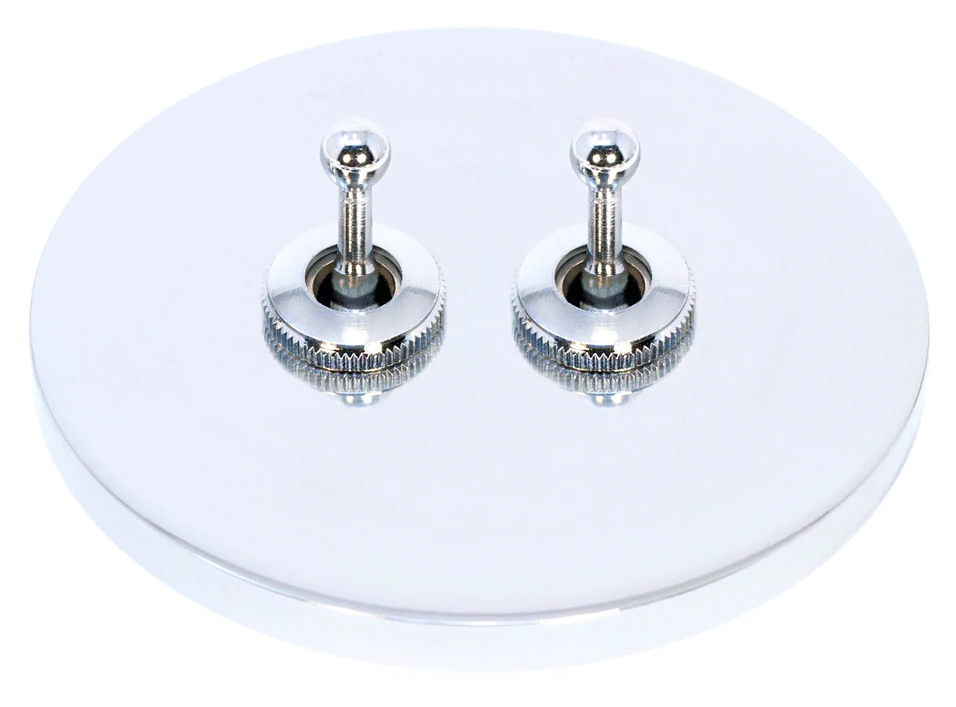 Room by room5 min readLiving room: double switches and lighting scenesCeiling light, wall lights, floor lamps: how to organise a living room's controls with double and triple plates. Advice and Empereur Paris products.
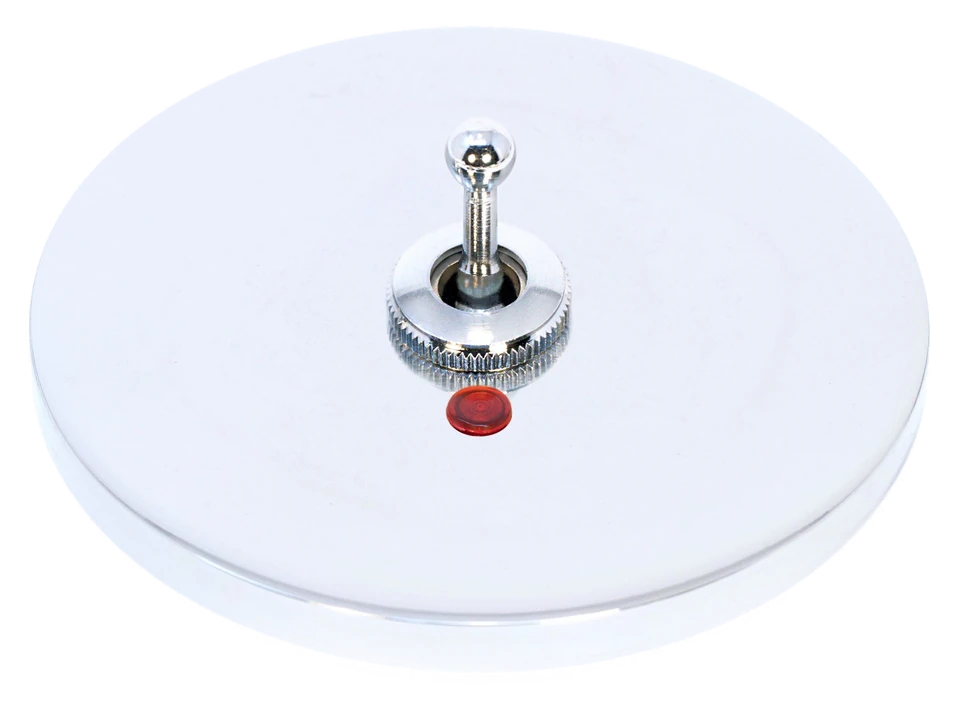 Room by room5 min readBedroom: two-way switch, indicator light and bedside USB socketLighting a bedroom without glare: two-way switch between door and bed, indicator light for the night, USB socket at the bedside. The Empereur Paris guide.